Legacy IT Practices and the Hidden Cost of Operational Inertia
In mid-sized organizations, IT modernization rarely fails because leadership rejects new technology. More often, it stalls because legacy processes have become embedded in daily operations—and, over time, those processes become the standard that gets taught.
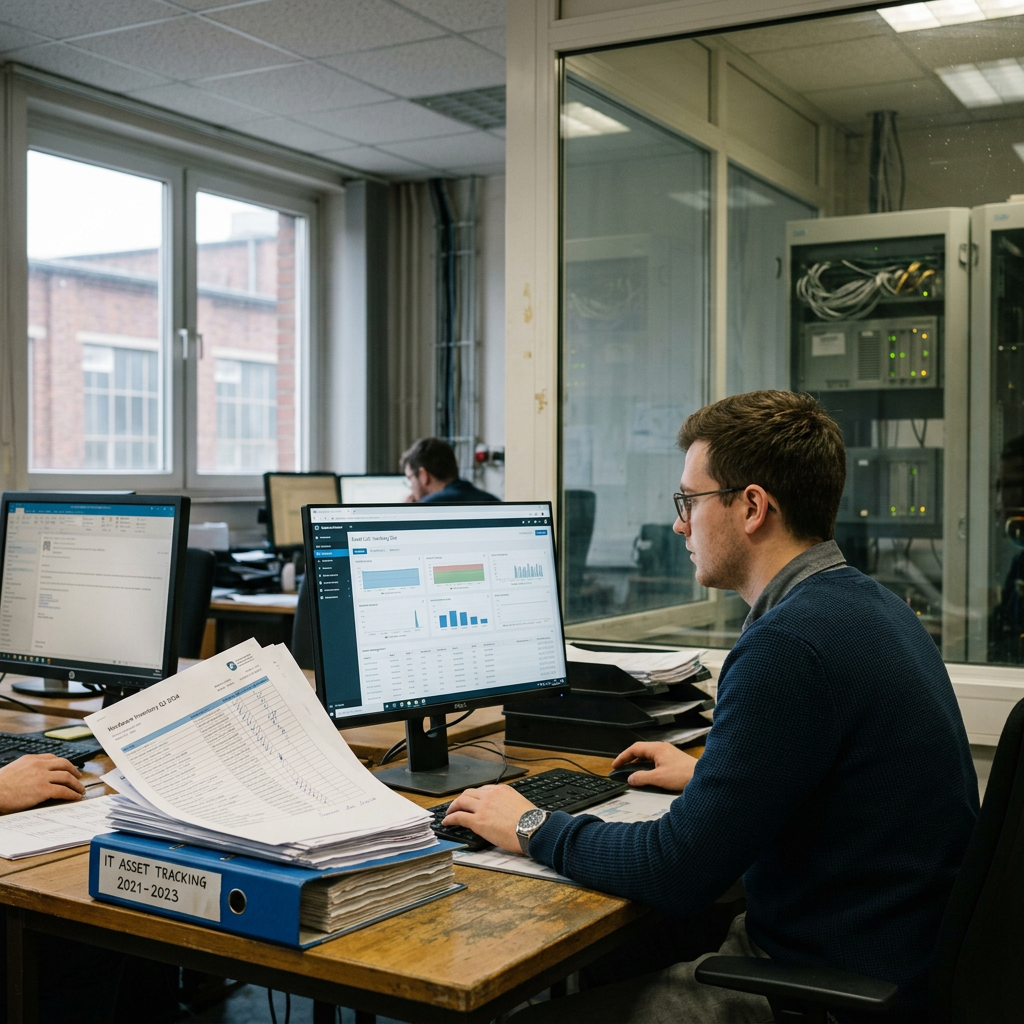
The pattern is familiar in operational environments. Asset records maintained in spreadsheets rather than a structured database. Network access configured manually instead of through centralized authentication. File migrations handled endpoint by endpoint rather than through a coordinated toolset. Backup procedures that depend on physical media and individual memory.
On their own, none of these decisions appears critical. They are small, familiar, and often defended as being ‘how we’ve always done it.’ But when the organization scales, these practices begin to compound.
The first consequence is operational risk. Manual workflows create undocumented dependencies. If the person who owns the spreadsheet leaves, the knowledge often leaves with them. If a manual migration is interrupted, there is no automated checkpoint to resume from. If a backup disk is misplaced or damaged, the recovery assumption is based on habit rather than verification.
The second consequence is consistency. Manual processes are inherently variable. Two technicians may handle the same task differently. Errors become harder to detect because there is no centralized audit trail. Reporting becomes slower because data must be assembled from multiple disconnected sources.
The third, and often underestimated, consequence is cultural. When legacy practices are presented as standard enterprise IT, they shape how junior staff understand their profession. Talented technicians who have seen more efficient environments quickly recognize the gap. They disengage, or they leave. In organizations where this continues, attrition becomes a quiet but persistent tax on the operation.
The issue is rarely the individual manager. It is usually the absence of a structured review process for operational workflows. Without that review, efficiency improvements depend on personal initiative rather than organizational design.
For founders and operations leaders, the practical step is straightforward: before investing in new systems, audit the workflows already in place. Identify which processes still match the organization’s current scale, and which ones are being maintained out of habit. This is often where modernization becomes operationally critical—and where the real return on systems investment begins.